Tag: nyc

  • NYC Weekday Lunch Deals by Borough

    I have been doing research on this recently, going through menus and deal listings across the boroughs to find where the actual value is hiding. Here is what I found, organized by type.

    French Prix Fixe: More Than You Would Expect for the Price

    A French prix fixe lunch is one of the better known deals for people who work in Midtown, but most people do not realize how far the value actually goes. A fixed price gets you two or three courses during a midday window on weekdays. The rooms tend to be calm. The food tends to be real restaurant cooking, not a pared-down lunch version.

    Here are the spots that stood out in my research.

    RestaurantNeighborhoodDealHours
    Paname Petite BrasserieMidtown East (2nd Ave & 56th St)2 courses $23 / 3 courses $26Daily, noon to 3pm
    Boucherie West VillageWest Village (7th Ave South)3 courses $33Mon to Fri, 11am to 4pm
    Red Eye GrillMidtown (7th Ave)2 courses $32Weekdays only
    CopinetteMidtown East (1st Ave & 50th St)3 courses $34Mon to Fri, noon to 3:30pm

    Paname is the standout value on paper. Three courses for $26 in Midtown, with a menu that includes escargot, crab cakes, chicken paillard, and creme brulee. That is not a discounted menu. It is just an honest price for a French restaurant that wants to fill seats at lunch.

    Boucherie gives you the widest window, 11am to 4pm, which creates real flexibility for either a late morning or early afternoon meal. Three courses includes soup or salad plus a main like mushroom ravioli or croque monsieur.

    Copinette runs a strong three course menu with crispy tortellini, grilled branzino, and pappardelle ragu. Steak frites is available as a $15 supplement if you want to go further, but the base menu already looks like more than you paid for.

    Pizza and Italian Casual: The Everyday Lunch

    This is where the range gets wide. New York has hundreds of Italian spots running weekday lunch specials. Most of what I found lands between seven and fifteen dollars and includes a drink. The best of them are genuine meals, not just filler.

    Here is what the menus show across the boroughs.

    RestaurantNeighborhoodStarting PriceWhat Is Included
    Big John’s Pizza and PastaQueens Village, Queens$4.75Daily rotating hero or pasta special
    Sicily’s Best PizzeriaBushwick, Brooklyn$7.00Pasta or burger with fries, 11am to 4pm
    Michelangelo’s PizzeriaWest Brighton, Staten Island$8.50Wrap, gyro, hero, or personal pie with soda or water
    Dino’s PizzeriaRiverdale, Bronx$9.00Hero or pasta with mini wedge, soda, and fries or salad
    Plaza PizzaStaten Island$9.95Entree with drink
    Joe’s Pizza and PastaWoodhaven, Queens$9.99Pasta, entree, or panini with drink, 11am to 3pm
    Genesis PizzaFlushing, Queens$10.40Hot hero, pasta, or wings with fries and free soda
    Bklyn PizzaBushwick, Brooklyn$11.56Heroes and pizzette, 11am to 3pm
    Bari’s PizzaStaten Island$12.00Entree with drink
    Rosebank PizzaRosebank, Staten Island$13.50Wide selection with a can of soda
    Goodfella’s Brick OvenHylan Blvd, Staten Island$16.00Entree with side salad and beverage, 11am to 3pm

    Big John’s in Queens Village is the most remarkable thing on this list in terms of pure value. Their menu shows a different special every day of the week. Monday is meatball hero. Tuesday is chicken. Wednesday is eggplant. Thursday is sausage. Friday cycles back to meatball. Specials start at $4.75. In 2026, in New York, that number is striking.

    Dino’s in Riverdale posts a $9 all in lunch that bundles a mini wedge, a soda, your choice of fries or salad, and a full hero or pasta. That combination of price and completeness is harder to find than it should be.

    Genesis in Flushing lists hot heroes, baked pastas, or wings with fries and a free drink at $10.40 across the board. The menu is long and the pricing is consistent, which is usually a good sign.

    What Makes a Lunch Deal Worth It

    Not every lunch special is actually a deal. Some are just the regular menu with a fountain soda added at the same price as ordering them separately. Here is what separates a real deal from a dressed-up regular order.

    What to look forWhat to avoid
    The price is lower than ordering items separatelyA regular entree plus a soda at the same total price
    The special is available consistently throughout the weekSpecials that disappear seasonally or change without notice
    A drink is included, not just listed as an add-onA drink listed at an additional charge that erases the savings
    The window is long enough to eat without feeling rushedA 90 minute technical window with obvious table-turning pressure

    The pattern in my research is that the best deals come from restaurants using lunch to fill seats during slower hours. French spots use prix fixe menus to attract the midday crowd. Pizza shops run specials to compete with fast food. The ones that do it honestly tend to also be the ones where the food and the room reflect some actual care.

    My Current Top Picks by Category

    CategoryPickWhy
    French prix fixePaname Petite BrasserieThree courses for $26 in Midtown including dessert
    Budget ItalianBig John’s, Queens VillageDaily rotating specials from $4.75
    Midrange ItalianDino’s Pizzeria, Riverdale$9 all in with salad, soda, and a full entree
    Upscale casualGoodfella’s, Staten Island$16 with salad and drink from a brick oven
    Best time windowBoucherie West Village11am to 4pm, which gives you real flexibility

    This list will keep growing as I find more worth adding.
  • Three Martini Lunch – Manhattan

    What matters in a three martini lunch spot:

    You need to be able to get in early. You need to be near transit. You need a martini program that takes itself seriously. And you need a room that signals this is a real meal.

    After comparing research from multiple sources, I kept coming back to five places.

    Del Frisco’s Double Eagle Steakhouse

    1221 Avenue of the Americas at Rockefeller Center

    This place opens at 11:00 AM on weekdays, which immediately puts it ahead of most competitors. The room is a three story space with floor to ceiling windows looking out at Rockefeller Center.

    The martini program is confident. They do classic dry and dirty martinis with quality spirits, and their bar menu has a lunch bundle that pairs a martini with oysters, Caesar salad, and fries for $39. That is a smart entry point if you want to pace yourself before ordering heavier plates.

    I would come here for the filet medallions or the tuna poke bowl. You can wear a suit without feeling overdressed, and you can get out quickly if you need to. The E train to JFK is close, and Penn Station is a short walk for Newark or Long Island connections.

    Cost for three martinis and a full meal runs $160 to $300 depending on what you order.

    Le Rock

    45 Rockefeller Plaza

    Le Rock also opens at 11:00 AM on weekdays, and it has the most developed martini program of any place on this list. They call it Martinis Maison, and it includes a Reverse Martini, a Gibson, a Vesper, a Dirty, and a 50/50. Each one is $24.

    This is a French brasserie, so the food skews toward steak frites, filet au poivre, sole meunière, and an omelette with caviar. The room has arched skylights and Art Nouveau touches. It reads as polished without being overly formal.

    Le Rock does not lean on steakhouse tradition. It is doing its own thing, and it does it well. Three martinis plus an entree and maybe a starter will run you $150 to $260.

    The location in Rockefeller Plaza makes airport access straightforward.

    The Dynamo Room

    2 Pennsylvania Plaza above Penn Station

    The Dynamo Room opens at 11:30 AM for lunch, Tuesday through Thursday only. That narrow window is worth noting.

    What makes this place different is the mini martini option. You can order a mini Gibson, Dirty, Vesper, or Cosmo for around $12, or go standard for $22. If you plan to have three martinis at lunch, the mini format lets you enjoy the ritual without losing your afternoon.

    The food is steakhouse leaning with a raw bar, hanger steak frites, and an express lunch menu. It sits on top of Penn Station, so if you are headed to Newark or JFK via train, this is the most convenient choice.

    Three minis and a meal will cost you $120 to $220.

    The Grill

    99 East 52nd Street in the Seagram Building

    The Grill does not open until 11:45 AM, so it misses the early window. But it is still here because it is the closest thing left to the original three martini lunch.

    This is the space that used to be The Four Seasons. The room is midcentury with dark wood and tableside service. The martinis come freezer cold in crystal decanters, made with a house blend of Plymouth and Tanqueray gins, vermouth, and spring water. They also do variations like the Tuxedo and the Kangaroo if you want vodka.

    The signature move is the prime rib carved tableside.

    The dress code is real. Three martinis and lunch will cost $250 to $400, and you should book weeks in advance.

    The Bar Room at The Modern

    9 West 53rd Street at MoMA

    The Modern opens at 11:30 AM daily. It is adjacent to the Museum of Modern Art, and the room is casual elegant.

    The martini here is made with a gin blend, blanc vermouth, and Alsatian kirsch. It is more composed than a classic martini. The food is seasonal contemporary American. You come here when you want sharp execution without feeling weighed down afterward.

    The dress code is business casual. Three martinis and a meal will run $150 to $260.

    How to choose

    If you need to be in and out by noon because of a flight, go to Del Frisco’s or Le Rock. Both open at 11:00 AM.

    If you are based near Penn Station and headed to Newark or JFK, go to The Dynamo Room and order the minis.

    If you want the most serious martini program, go to Le Rock.

    If you want the full classic experience and cost is not a concern, go to The Grill.

    If you want excellent food and drinks in a more contemporary setting, go to The Modern.

    A note on booking

    Book two to four weeks ahead for weekday lunch slots, especially Tuesday through Thursday. The Grill requires advance reservations. Le Rock and Del Frisco’s fill up quickly at 11:00 AM. The Dynamo Room only does lunch Tuesday through Thursday, so check the schedule.

    All of these places operate primarily on weekdays. Confirm hours directly before you go, because seasonal adjustments happen.

  • Five Recommended NYC Counter-Service Dumpling Spots

    Five Recommended NYC Counter-Service Dumpling Spots

    I live in the East Village, and I have spent the better part of three years eating dumplings at counter-service spots across New York City. Some of what I write here comes from personal experience. The rest comes from research, reading, and talking to people who eat dumplings more than I do. I will be clear about which is which.

    This is not a comprehensive guide. It is a record of five places that show what a dumpling can be when every detail is attended to.

    The five spots

    1. Shu Jiao Fu Zhou, Chinatown

    This is my favorite dumpling spot in New York City. I have eaten here many times, and it is awesome every single time.

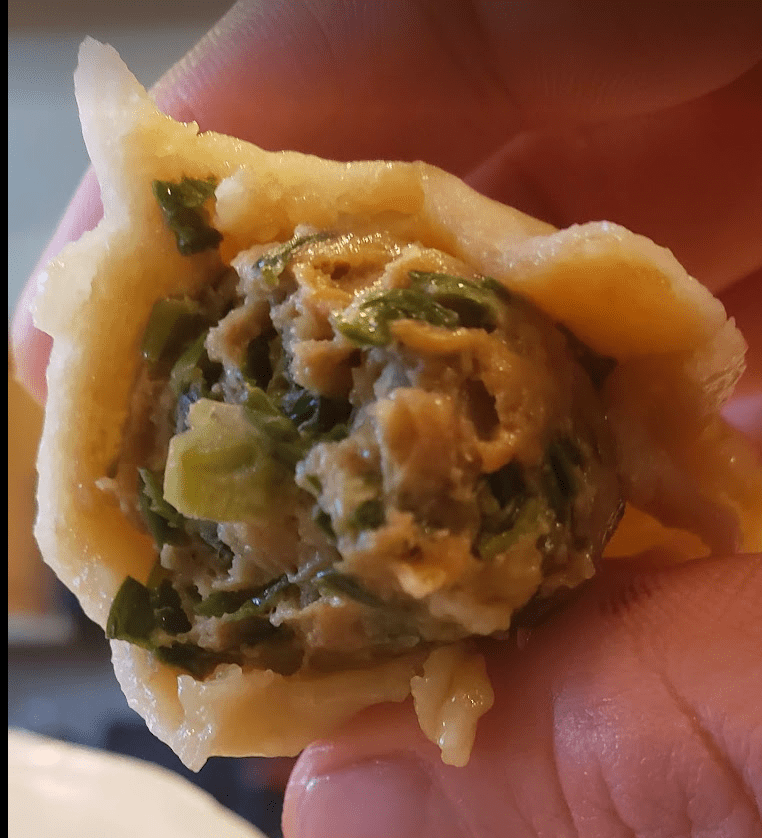
    They specialize in northern style dumplings with paper thin wrappers that puff when steamed. The pork and chive filling is so well seasoned that you do not need sauce. The dumplings are juicy, almost to the point of being soup dumplings, but they hold their shape.

    Six dumplings cost three dollars. You can also buy a bag of fifty frozen dumplings for twelve dollars.

    2. White Bear, Flushing

    White Bear is a takeout window with a menu of thirty four items taped above the counter. Everyone orders the same thing. Number six. Wontons in chili oil.

    The wrappers are thin, almost translucent, with a soft chew that yields immediately. They do not tear. They do not stick to each other.

    The filling is pork and vegetables, balanced and juicy. But the chili oil is what really makes White Bear what it is. It is bright, sharp, and layered. The pickled vegetables add crunch and acidity. The scallions add freshness.

    I am somewhat sensitive to chili oil, and even I went back.

    3. North Dumpling, Lower East Side

    Workers fold dumplings at a table in the back. Another worker fries them in batches and delivers them to the front counter, still crackling.

    I have had North Dumpling many times, and it is really good. The wrappers are medium thick. They develop a crust on the bottom that shatters when you bite into it. The inside stays chewy. The filling is ginger forward, bold, and porky.

    Ten dumplings cost four dollars. The consistency is ironclad. The turnover is so high that every order feels like it just came off the line. I do not think it quite reaches the level of Shu Jiao Fu Zhou, but for the price, it is hard to beat.

    4. Vanessa’s Dumpling House, Chinatown

    Vanessa’s has been open since 1999. It has multiple locations.

    The wrappers are thick, but tender. They hold up to steaming or frying without becoming gummy. The filling is chive heavy, uniformly fresh, and dependable.

    It is not quite at the level of the top three spots on this list, but it is still a good option. Consistency across years and locations counts for something.

    5. Tasty Dumpling, Chinatown

    I have not tried Tasty Dumpling yet, so this ranking is based on research rather than personal experience.

    It sits across from Columbus Park on Mulberry Street. The dumplings are reported to be small, ribbed, and darkly flavorful. The wrappers are said to be surprisingly delicate for a spot at this price point.

    Four dumplings cost two dollars. The portion is designed for snacking, not for a full meal. Multiple sources note that the dumplings do not travel well. It is on my list to try soon.

    A note on other strong contenders

    I have not had a chance to try Wei Mei Xian in Sunset Park yet, but I have heard great things. The wrappers are said to be nearly translucent, and their version of xiao long bao reportedly crosses into steamed bun territory.

    Jin Mei Dumpling on Henry Street offers fifteen dumplings for five dollars, and it is pretty good if you like volume. The flavor profile is unusual though. The filling tastes almost like ground beef or ground pork mixed with some kind of chili seasoning. If that sounds appealing, it is worth a trip.

    I have heard good things about Super Taste on Eldridge Street as well, but I have not had a chance to try it yet. They are known for deep fried dumplings with aged black vinegar.

    Same goes for Fried Dumpling on Mosco Street. I have heard it is a historic spot and still satisfying, but I have not been able to get there yet.

  • The Best OvRride Snowboard Resorts Near NYC: A 2026 Ranking for Intermediate Riders

    If you live in New York City and rely on the OvRride bus to get to the mountains, you know the struggle. You want fresh snow, wide trails to practice your carving, and a stress-free day. But the 2025-2026 season has been wild. We have seen everything from freezing cold snaps to unseasonably warm spells. Plus, with big companies buying up local resorts, the crowds have changed.

    For an intermediate rider (someone who can link turns but isn’t ready for steep ice) picking the wrong mountain can ruin your day. We analyzed the top bus destinations to rank them based on what actually matters to you. We looked at snow quality, crowd levels, and whether the travel time is worth it.

    Here is the definitive, ranked guide for the NYC intermediate snowboarder.


    How We Ranked These Mountains

    We ignored the marketing hype and focused on the reality of a day trip from Union Square. Here is our criteria:

    • Uncrowded Trails: You need space to turn without fear of collisions.
    • Snow Quality: We prioritize soft snow over ice because it is safer for learning.
    • Intermediate Terrain: We looked for “carving blues” which are wide, consistent trails that aren’t too steep.
    • The Commute: We weighed the total time of the trip against the quality of the experience.

    Note: This guide is optimized for weekday trips. Weekends in the Northeast are almost always crowded regardless of where you go.


    1. The Winner: Belleayre Mountain (Highmount, NY)

    The “Hidden” Gem of the Catskills

    For the 2026 season, Belleayre Mountain is the clear winner. Unlike the corporate resorts nearby, Belleayre is state-run and feels more like a park than a business. It is relaxed, friendly, and focused entirely on the riding experience.

    Why It Wins on Snow

    Belleayre sits in a unique spot that often gets the “Catskill Cloud” effect. This means it frequently gets more natural snow than neighboring mountains. It also has a high ridge that protects the trails from the wind. This keeps the snow soft rather than stripping it down to the icy base.

    The Best Trails for Carving

    The layout is perfect for learning. The upper mountain features wide, rolling blue trails that don’t get too steep suddenly. The standout run is Dot Nebel. It is incredibly wide and allows you to lock in big, sweeping turns. Another favorite, Deer Run, offers a long, peaceful cruise. You rarely find dangerous intersections here.

    The Trade-Off

    The only downside is the distance. It is about 135 miles from NYC. The bus ride usually takes around 3 hours each way. However, the superior snow and lack of crowds make the travel time a smart investment.

    Verdict: The best experience available. The extra travel time pays off with better snow and empty trails. Aim for a Wednesday trip for a private mountain feel.

    2. The Runner-Up: Hunter Mountain (Hunter, NY)

    The Industrial Snow Giant

    Hunter Mountain is the heavyweight of the region. It is famous for its snowmaking power. If nature doesn’t provide snow, Hunter’s massive automated system will cover the mountain in hours. It has fast lifts and a big lodge, but it comes with a chaotic atmosphere.

    The “Hunter North” Strategy

    If you go to Hunter, you must be strategic. Stick to the Hunter North expansion. This area is newer and served by a high-speed 6-person lift. The trails are wide, straight, and usually much less crowded than the main face of the mountain.

    The Warning

    Avoid the main summit trails like the Belt Parkway if you can. It is a famous intermediate run, but it gets so much traffic that it often gets scraped down to ice by midday. It can feel like a highway during rush hour.

    Verdict: A strong backup option with great lifts. Stick to the Northern side to avoid the ice and crowds.

    3. The Vertical Challenger: Blue Mountain (Palmerton, PA)

    Big Vertical, Long Day

    Blue Mountain offers the highest vertical drop in Pennsylvania. This means you get long, sustained runs that let you get into a good rhythm. Trails like Razor’s Edge are excellent for practicing technique on a consistent slope.

    The Logistics Problem

    The issue here is the commute. While it looks close on a map, the bus route through New Jersey and Pennsylvania traffic is brutal. A typical day trip can last 13 to 14 hours from departure to return. That is a lot of time on a bus for Pennsylvania conditions.

    Verdict: Great terrain with long runs, but the 14-hour travel day makes it a tough sell compared to the Catskills.

    4. The Sleep-In Option: Camelback Mountain (Tannersville, PA)

    The Midday Advantage

    Camelback has one unique feature which is the schedule. You can catch a “Midday” bus that leaves Union Square at 10:30 AM. If you hate waking up at 5:00 AM, this is your only real option.

    The Reality Check

    Because you arrive late, you ride late. Camelback has night lighting, but riding at night often means riding on hard surfaces as the temperature drops. The resort is also very commercial and attached to a massive waterpark. Expect loud crowds and a busy base area. The snow on the main trail, Nile Mile, is deep but often gets pushed into piles of sugar and ice.

    Verdict: Choose this only if you need to sleep in. It is a lifestyle choice rather than a performance choice.

    5. The “Gym” Option: Mountain Creek (Vernon, NJ)

    So Close, Yet So Icy

    Mountain Creek is the closest option at just 47 miles away. It serves as a local gym for riders who just need a quick fix. However, its low elevation means it struggles with the weather.

    Why It Ranks Last

    The snow here often melts during the day and freezes at night. This creates “boilerplate” ice that is unforgiving for snowboarders. The main intermediate trail, Horizon, acts as a funnel for the whole mountain. It is often packed with people which makes it a stressful obstacle course rather than a fun run.

    Verdict: Only go here if you absolutely cannot spare the time for a longer trip. It is convenient, but the ice and crowds are difficult for learners.

    Summary Comparison

    Resort Uncrowded Score Snow Quality Travel Ease Best For
    1. Belleayre 10/10 9/10 6/10 Best Overall
    2. Hunter 8/10 7/10 6/10 Fast Lifts
    3. Blue Mtn 7/10 6/10 6/10 Long Runs
    4. Camelback 5/10 5/10 8/10 Sleeping In
    5. Mtn Creek 4/10 3/10 10/10 Short Trip

    Final Tips for Your Trip

    • Watch Out for Plattekill: You might hear about a cool indie mountain called Plattekill. It is awesome, but it is usually closed Monday through Thursday. Don’t book a weekday trip there without checking the schedule.
    • Bring Low-Light Goggles: The light in the Northeast is often flat and gray. Yellow or pink lenses will help you see the ice patches before you hit them.
    • Hydrate: The bus ride is long and dry. Drink plenty of water to avoid leg cramps on the ride home.

  • Living in NYC: Recommendations from Year One

    This isn’t a “best of New York” list. It’s a set of things that made day-to-day life here noticeably better after a year of trial, error, and mild overcommitment.

    Live somewhere walkable, even if it costs more.
    Being able to walk to coffee, groceries, bars, parks, and friends changes how often you actually use the city. Central neighborhoods beat “nice but remote” ones. If you can walk most places, the city feels smaller and calmer.

    Optimize for your daily radius, not your weekend fantasies.
    It’s tempting to pick a neighborhood based on where you might go. Pick based on where you actually end up going on a Tuesday night. Your regular routes matter more than edge cases.

    Say yes early, then get selective later.
    The first six to nine months are for sampling. Go to things. Accept random invitations. Use social apps if that lowers friction.

    Don’t confuse busyness with connection.
    New York makes it easy to be socially full but relationally thin. That’s normal. The goal isn’t more plans, it’s seeing the same people again without effort.

    Let the city regulate you instead of pushing against it.
    You don’t need to extract everything from New York. You don’t need to “do the most.” Some weeks are loud. Some are quiet. Both count.

    Walk as much as possible.
    Walking is the cheat code. Transit is efficient, but walking teaches you where you actually are.

    Expect housing to be temporary, and don’t panic about it.
    Month-to-month living feels unstable until you realize that flexibility is the feature.

    Spend money on access, not status.
    Pay for things that reduce friction: proximity, convenience, time.

    Use the city instead of escaping it.
    Ironically, living here reduced my urge to travel.

    Accept that NYC won’t give you direction.
    A city is a container, not a compass.

    If New York works for you, it’ll feel like a place that quietly supports a lot of different lives at once, including yours.